Winter Salad Greens: Choosing Between a Cold Frame and an Indoor LED Garden
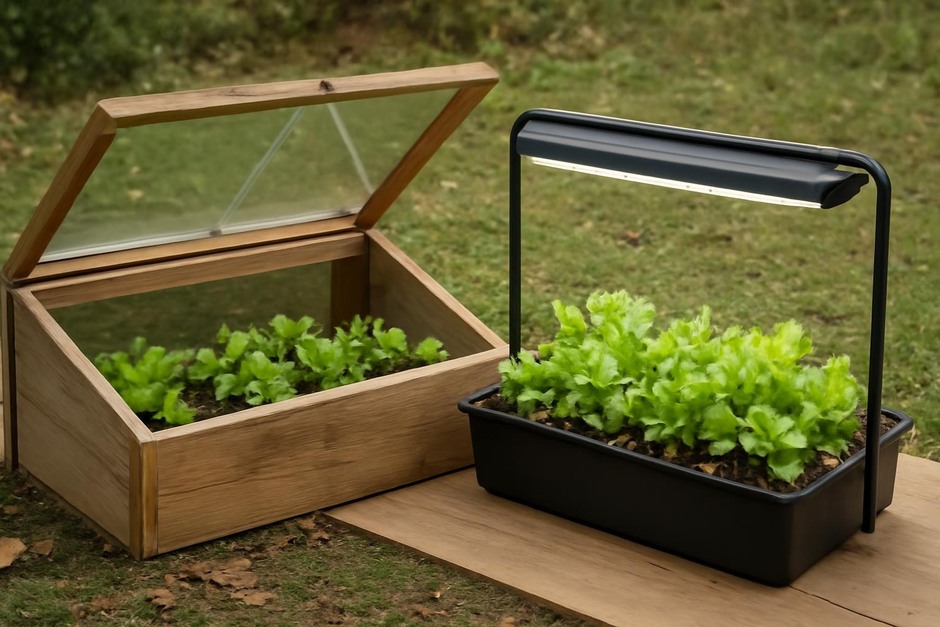
When daylight shortens and nights grow chilly, keeping a steady supply of tender salad greens feels like a small victory. Two common approaches for extending harvests through late fall and winter are the outdoor cold frame and the compact indoor LED garden. Both can produce crisp leaves and steady succession sowings, but they create different microclimates, require different inputs, and reveal different maintenance rhythms.
Comparing the two approaches
Cold frame: working with the outdoor edge
A cold frame is essentially a low, unheated mini-greenhouse: a raised bed or box with a glazed lid that captures sunlight and traps heat. It sits directly on the ground and relies on passive solar warming.
- Microclimate: Daytime warming can be surprisingly effective on sunny days; nights are cooler and temperatures follow outdoors with a buffered lag. Frost is possible on prolonged cold spells.
- Light quality: Natural full-spectrum sunlight is ideal for growth but varies with season and weather.
- Water and substrate: Soil in the frame drains and breathes like garden soil; you may need to mulch or add compost for structure and nutrition.
- Pest exposure: Some pests are excluded by the lid; ground pests and slugs may still be an issue unless barriers are used.
- Energy and cost: Low energy use — no electricity — and materials can be simple reclaimed wood and old windows.
- Maintenance rhythm: Open the lid on warmer days for ventilation; watch for sudden freezes and insulate as needed.
Indoor LED garden: controlled light and warmth
Indoor LED systems come in many sizes: countertop boxes, vertical towers, or modular shelves. They use full-spectrum LEDs to replace daylight and are usually paired with container media and active watering.
- Microclimate: Stable, warm room-temperature conditions around the unit. Temperatures are decoupled from outdoor extremes.
- Light quality and timing: You control duration and intensity; predictable light is useful for consistent growth and faster turnover.
- Water and substrate: Soilless mixes or potting soil in containers are common; some systems include reservoirs or automated watering.
- Pest exposure: Lower risk from many outdoor pests, though indoor fungal issues or aphids can occur with poor ventilation.
- Energy and cost: Uses electricity for lights (and sometimes pumps); initial cost varies from modest to high depending on quality.
- Maintenance rhythm: Regular watering, occasional reservoir checks, pruning, and cleaning of light fixtures or trays.
Guidance for choosing between them
Choosing between a cold frame and an indoor LED garden comes down to observing your site, your household rhythms, and the type of harvest you want. Use the following checklist and practical observations to decide.
Checklist: site and household considerations
- Available space: Do you have a sunny outdoor spot near the house where a cold frame can sit, or only a balcony / indoor counter? A cold frame needs direct winter sun; an LED garden only needs a power outlet.
- Typical winter temperatures: If your region has long hard freezes and short sunny periods, an indoor LED setup will give more predictable results. If winters are mild with sunny days, a cold frame may suffice.
- Energy and budget: Consider ongoing electricity costs for continuous lighting versus one-time construction for a cold frame. Also factor in initial material costs and desired longevity.
- Time and attention: Are you comfortable opening and ventilating a cold frame daily on warm days? Or do you prefer the set-and-monitor convenience of automated indoor systems?
- Desired yield and turnover: If you want quick, continuous succession plantings, LEDs with controlled light cycles speed up growth. If you prefer slower, seasonal rhythms, a cold frame supports that pace.
Practical observations to run as a mini-experiment
- Over a two-week period, measure daytime light levels where you would place a cold frame (use a phone light meter or simply note how bright the sun is). If days are frequently overcast, growth will slow outdoors.
- Place a thermometer in the proposed cold-frame site and next to the house indoors. Record temperature swings to see how much buffering you can expect from a covered frame.
- Try a small indoor tray under a modest LED light as a trial. Note growth rate, energy use, and how often you need to water. This reveals maintenance time and steady yield potential.
Hybrid and middle-ground options
Some gardeners combine the two: start seedlings indoors under LEDs for speed, then harden them off in a cold frame to acclimate before outdoor placement. Others use a temporary LED in a glassed-in porch to bridge the gap when nights dip below ideal frame temperatures.
Ultimately, the right choice aligns with your climate, the rhythm you enjoy, and how much control over the growing environment you want. Observe a small test area, note the resources you’re willing to commit, and select the method that matches both your conditions and your daily habits. Either approach can give you a steady bowl of fresh greens through the season if tuned by careful observation.